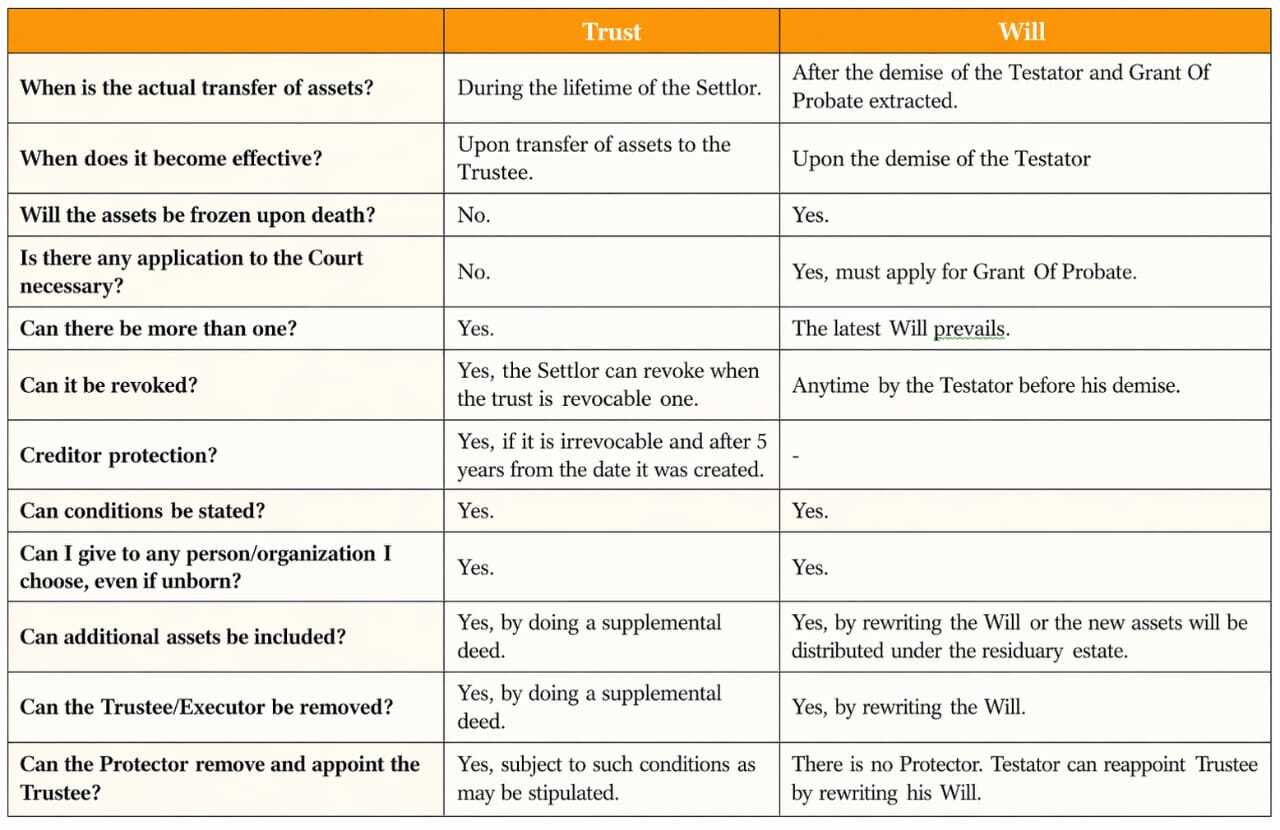
A Trust is an estate planning instrument for an Individual to ensure that his assets are protected and looked after by a Trustee or Trustees for the benefit of the trust beneficiaries.
How does a Trust work?
The Trustee receives the assets from the Settlor and is legally obligated to hold and manage the assets for the enjoyment of the beneficiaries during the trust period set by the Settlor.It is commonly known as “Living Trust”
Who is the Protector of Trust?
A person appointed by the Settlor with the following job scope:-
The assets commonly used to set up a trust are: cash, insurance policies, unit trust, properties, shares. The property under the Trust does not belong to the Trustee personally. Though the trust property is registered in the Trustee’s name, it is NEVER part of the Trustee’s own properties when he dies. Only the Trust beneficiaries will be entitled to the Trust Fund NOT the Trustee’s own beneficiaries.
Distributing Wealth To Bypass Grant Of Probate
Trust is useful when you have :-
Protecting Wealth
2. Against Creditors of Settlor and Beneficiaries ;
3. Protecting Wealth Against the Settlor's Creditors ;
This is achieved by creating a Discretionary Trust when any of the beneficiary becomes bankrupt, he will no longer be entitled to the benefit under the Trust.
Preserving assets for your great grandchildren.
For example education and maintenance fund for grandchildren, nephews etc
Distributes the way you want it to
For example, set goals to be achieved (such as a college degree) before your loved ones receive anything from the trust or to be used for their medical expenses. This avoids wastage of the trust fund.
Just like a Will, it is your choice, no one can challenge it.
No lengthy legal process. Trust Fund is readily available for the beneficiaries’ use because it is in the Trustee’s name. It complements the Will you wrote.
Once the trust is created and the Protector appointed, the well-being of your beneficiaries are taken care of.
When assets have been in the trust for more than 5 years.
Disgruntled family members who are not receiving anything from the trust are unable to make claims against the trust because the assets are no longer under your name.