Distribution Act 1958 (Extracts)

πŸ“œ Distribution Act 1958 (Malaysia) – Key Extracts Explained

βš–οΈ 1. When This Act Applies

The Act applies when a person dies without leaving a valid will.

πŸ‘‰ If there is a will, the will overrides this Act (as long as it is valid).


πŸ‘¨β€πŸ‘©β€πŸ‘§ 2. Who Gets the Estate (Main Rule)

The estate is distributed to family members according to fixed rules, not personal wishes.

Common distribution order:

  • Spouse (husband or wife)
  • Children
  • Parents
  • Siblings
  • Other relatives (if no closer family exists)

πŸ’° 3. Distribution Shares (Key Extract Rule)

If there is a spouse and children:

  • Spouse gets a portion
  • Remaining estate is shared among children

πŸ‘‰ Example (simplified):

  • Spouse: 1/3
  • Children: 2/3 (shared equally)

If there is only a spouse (no children):

  • Spouse gets a larger portion
  • Parents may also receive a share

If there are no spouse or children:

  • Estate goes to parents
  • If no parents β†’ siblings
  • If no siblings β†’ more distant relatives

🧾 4. No Will = Fixed Law Applies

One of the most important legal effects:

πŸ‘‰ You lose control over who inherits your assets.

For example:

  • You cannot choose friends, charities, or stepchildren
  • Only legally recognised heirs under the Act receive assets

⚠️ 5. Key Legal Impact (Important Extract Idea)

If someone dies without a will:

  • Court follows Distribution Act strictly
  • Family disputes may increase
  • Delays in asset release are common
  • Business assets may be frozen temporarily

🧠 6. Why This Law Matters (Practical Insight)

The Distribution Act 1958 is often the reason people are advised to:

βœ” Write a will
βœ” Set up a trust
βœ” Do estate planning

Because it shows:
πŸ‘‰ β€œIf you don’t plan your estate, the law decides for you.”
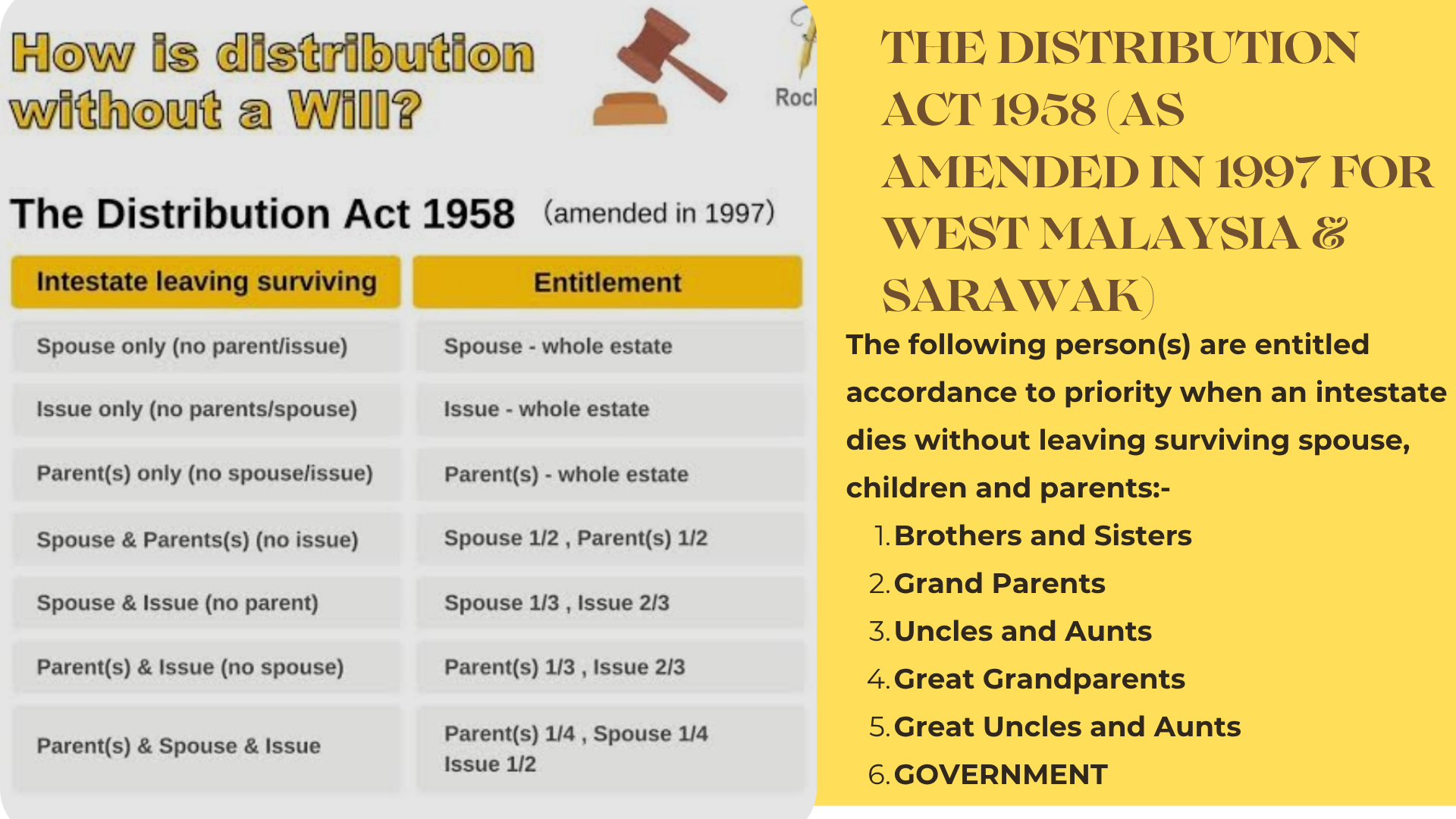
The Distribution Act 1958 (Amended 1997) governs asset distribution for non-Muslims in West Malaysia and Sarawak dying without a will, or with an incomplete will.

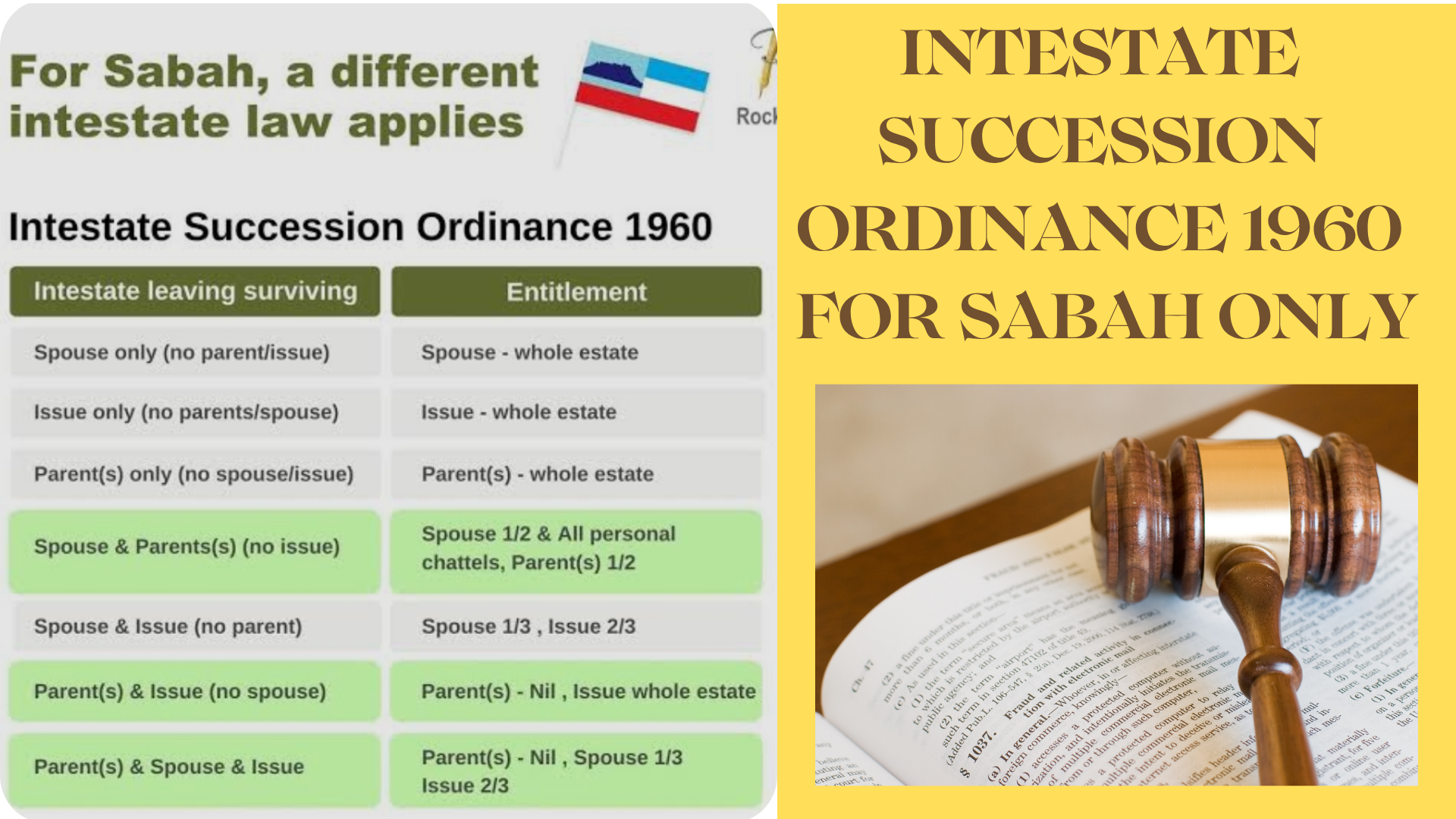
INTESTATE SUCCESSION ORDINANCE 1960 (FOR SABAH ONLY)

πŸ“œ Distribution Act (Sabah) – Key Notes & Definitions

The Distribution Act applies only in Sabah, Malaysia, and does not apply to Muslims or native Sabahans. It governs how estates are distributed when a person dies without a valid will (intestate succession).


βš–οΈ Scope of the Act


πŸ‘¨β€πŸ‘©β€πŸ‘§ Beneficiaries Under the Act

The Act considers:


🧾 Definition of Personal Chattels

Personal chattels refer to movable personal belongings used in daily life (not for business purposes).

Includes:

❌ Excludes:


πŸ‘¨β€πŸ‘©β€πŸ‘§ Definition of Uncles and Aunts

Under the Act:


⚠️ Key Legal Insight

If a person dies without a will in Sabah:


🧠 Important Estate Planning Note

This law highlights the importance of:


πŸ” SEO-Friendly Summary

The Distribution Act in Sabah governs intestate succession, defining how estates are distributed when there is no will. It excludes Muslims and natives of Sabah and includes specific rules on beneficiaries and personal chattels, ensuring legal distribution among family members.